Travel season & health
Safari in January, February and March: why we deliberately travel in the green season
Almost every German travel guide recommends the dry season from June to November for South Africa. Our dates fall right outside it. That is no accident — here is why, and what you really need to weigh up.
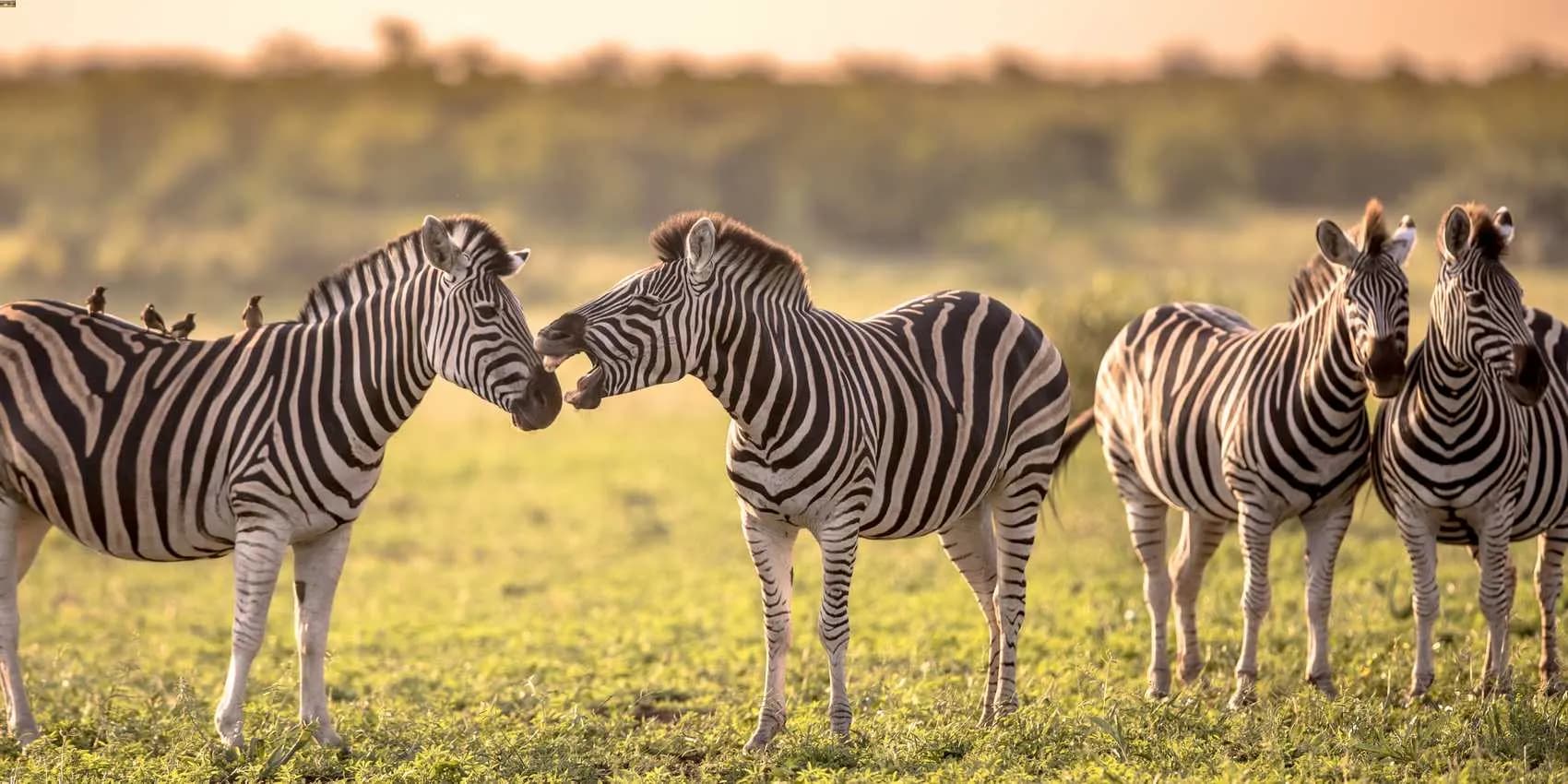
What the green season really is
January to March is high summer in southern Africa. It is warm, mostly between 25 and 33 degrees Celsius, and it rains — but not the way most people expect. Short, heavy afternoon thunderstorms are typical, not days of constant rain. The rest of the day is often clear, with a light you don't get in the dry season.
In these months the landscape is green instead of dusty brown. That's where the name comes from — and why photographers love this time of year. It is also when most young animals are born: impalas, wildebeest, zebras. Anyone heading into the bush in January sees an ecosystem in its most active phase.
The honest downside: the grass is high and the foliage is dense. Animals are harder to spot than in parched August, when everything gathers at the few remaining waterholes. That is the real reason the dry season counts as the “best time to travel” — not the weather, but visibility.
Why a private reserve makes the difference
The visibility drawback mainly affects self-drivers in the public Kruger National Park. There the rules are: stay on the tarred roads, don't get out, and whatever stands 200 metres away in the tall grass stays invisible.
We move across around 22,000 hectares of private reserve in the Greater Kruger. That means we are allowed to leave the tracks, we work with local trackers who read signs instead of hoping for luck, and we go on foot where it is responsible to do so. With a maximum of ten participants in small groups, that is a completely different way of searching than a convoy of vehicles on the main road.
It doesn't remove the drawback entirely. It puts it firmly into perspective.
Malaria: the facts, without sugar-coating
North-eastern South Africa — including the Kruger region — is considered a malaria risk area. The risk is not constant: it is highest in the warm, wet season from roughly November to April and considerably lower in the dry season. Our dates fall in the period of higher risk. That belongs on the table before you book, not after.
What this means in practice: there is effective prevention. It includes protection against bites — long, light-coloured clothing at dusk and dawn, repellent with a sufficient concentration of active ingredient, a mosquito net — and, depending on your individual situation, medication as prophylaxis. Many travellers visit this region all year round; it is a calculable risk, not an extraordinary one.
Important, without exception:
Which prophylaxis is right for you depends on your medical history, your medication and how well you tolerate it. That decision belongs with a travel medicine specialist or a tropical medicine institute — not on a travel website and not with us. Plan the appointment about six to eight weeks before departure. You can find current country-specific advice from the German Federal Foreign Office (opens in a new tab) (in German).
Entry and vaccinations
German citizens do not need a visa for tourist stays of up to 90 days in South Africa. Your passport must be valid for at least 30 days after departure and have at least two completely blank pages — this really is checked on entry.
There are usually no mandatory vaccinations when travelling directly from Germany. The standard vaccinations on the routine schedule are usually recommended, plus others depending on your travel profile. Again, the best place to clarify this is the same appointment with the travel medicine specialist. Please don't rely on this page for the current situation — entry requirements change.
Our dates for 2027
Three dates, 14 days each, a maximum of ten men.
from €4,500 per person
So: the right time or not?
If your only goal is to tick off as many animals as possible in the shortest time, September is the better choice. We say that openly.
But if you want to spend two weeks in a landscape that is alive rather than just enduring — with young animals, with thunderstorms over the savannah, with nights warm enough to sleep outside — then the South African summer is not the compromise. It is the reason.